Bonito, Brazil Travel Guide: What to Know Before You Go
Bonito, Brazil Travel Guide: What to Know Before You Go
The starting point for foreign visitors: what Bonito is, where it sits on the map, how tours are sold and which practical pages to read next.
Updated September 24, 2026 · Guia de Bonito editorial team
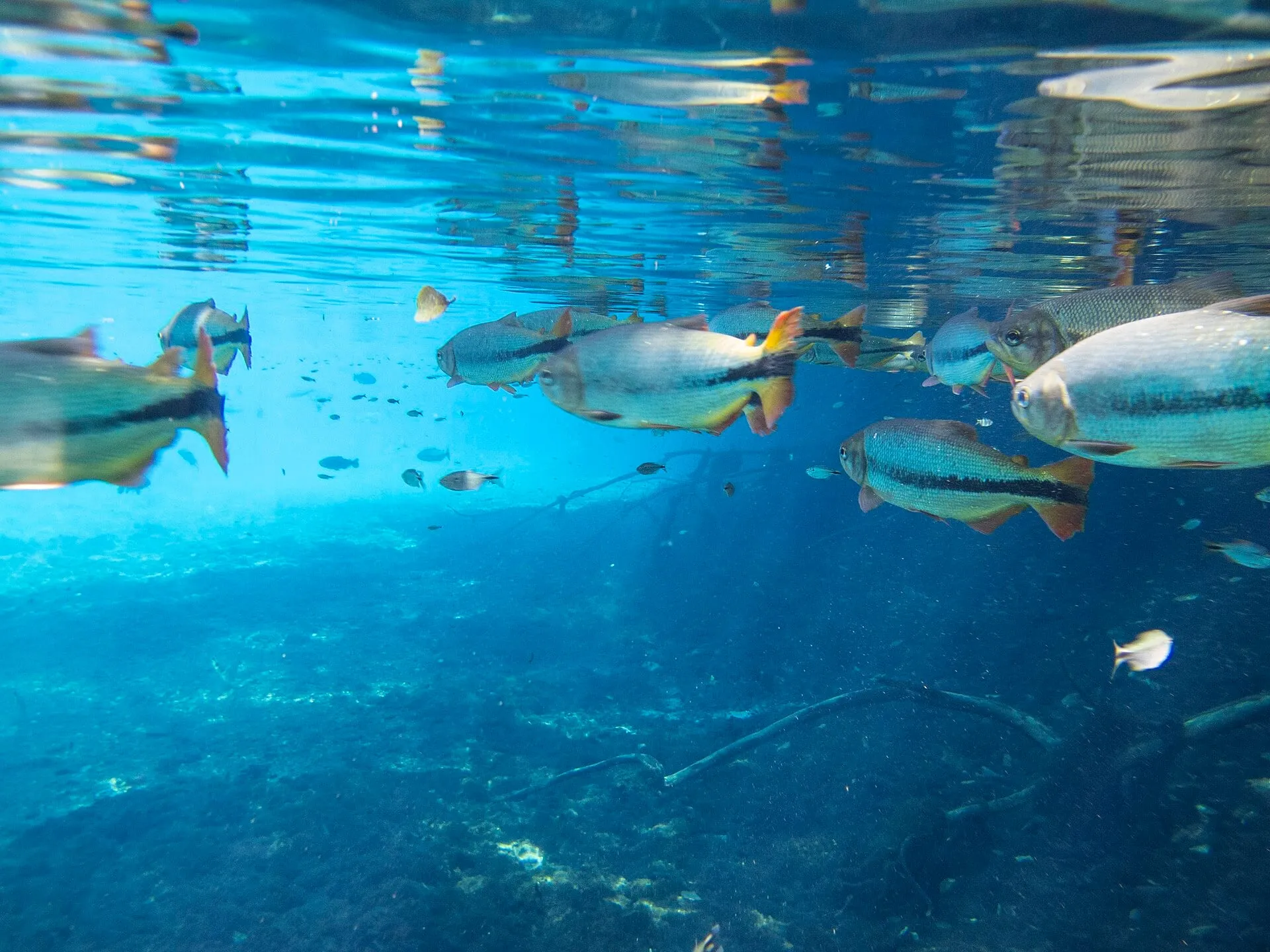
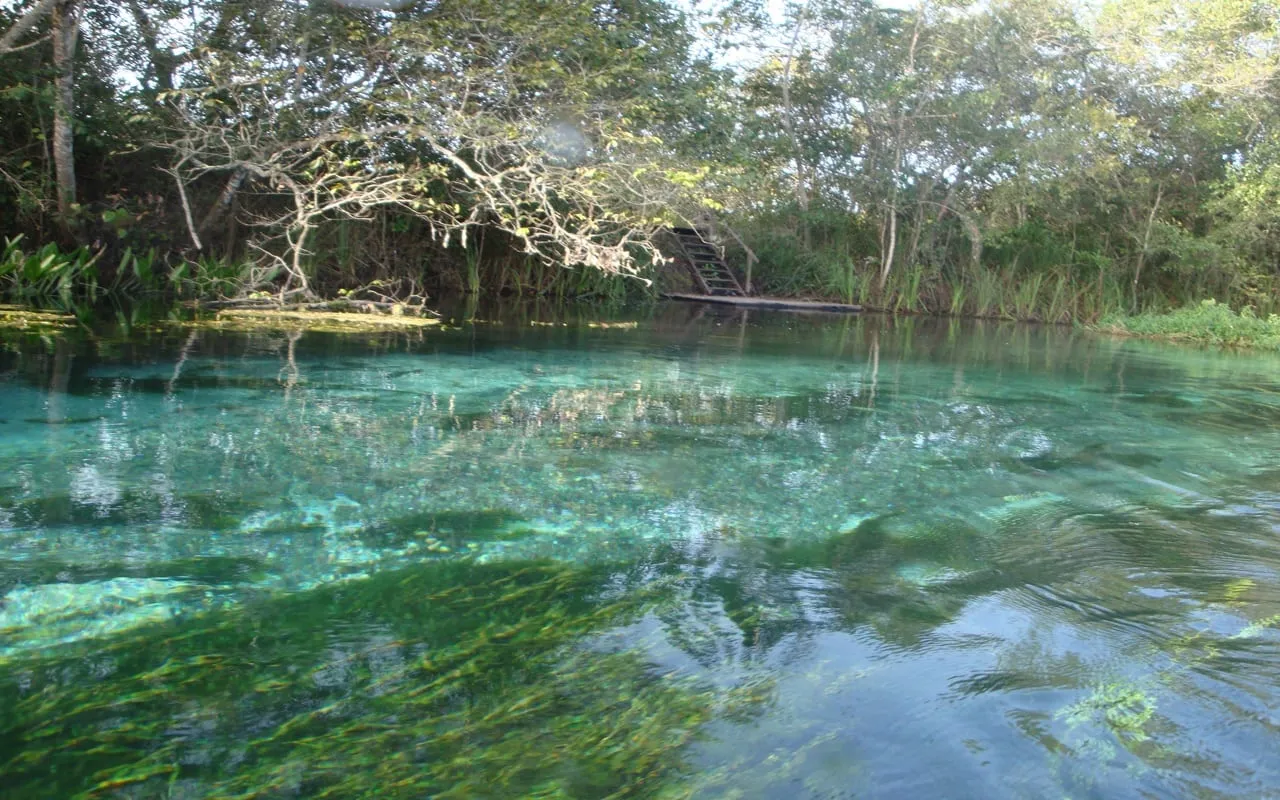
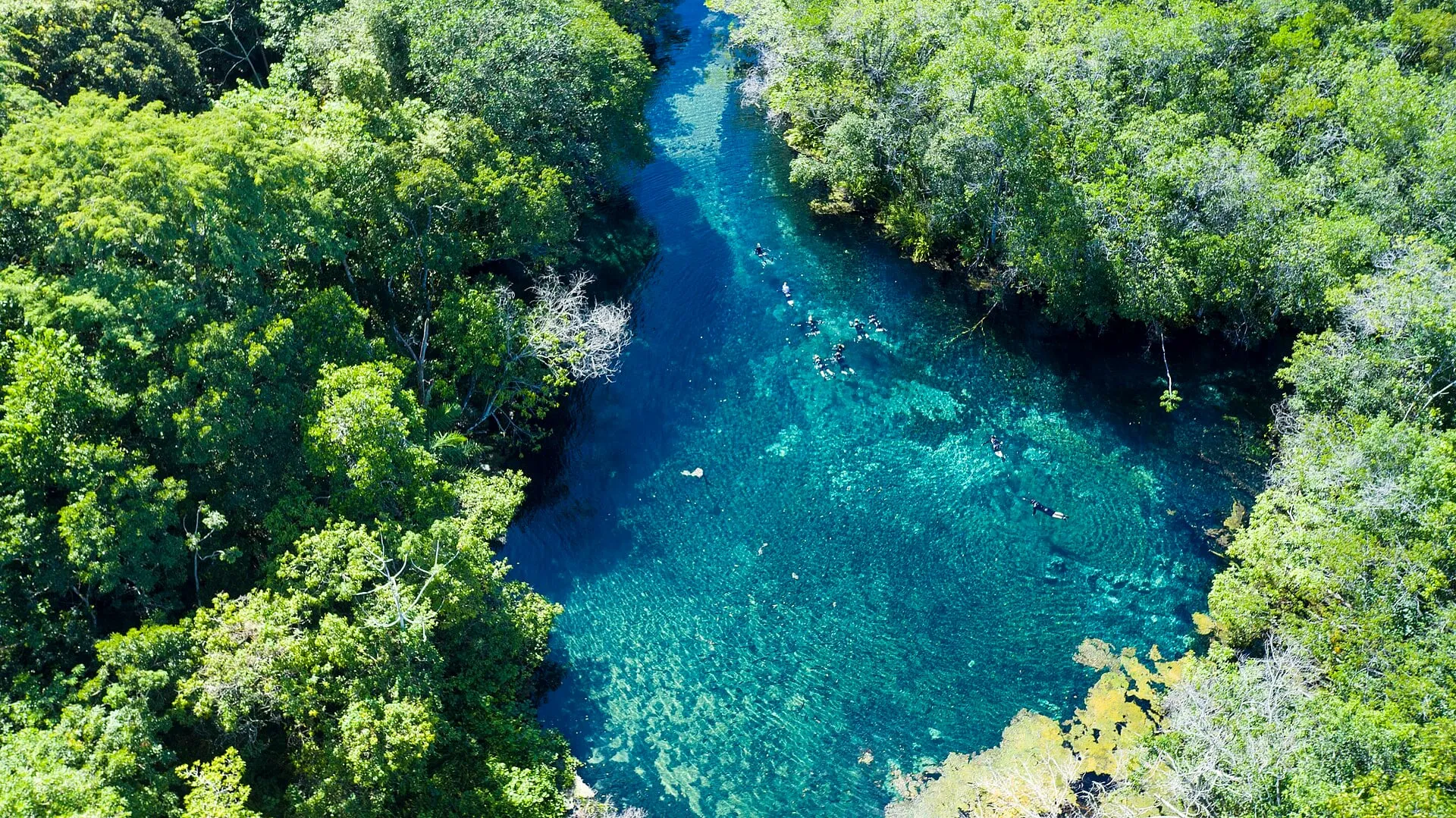
Bonito is a small town in the state of Mato Grosso do Sul, in Brazil’s Center-West, known for rivers so clear you can watch fish from the surface as if through glass. The water is spring-fed and runs over limestone, which filters sediment and keeps it transparent. Around the town, in the Serra da Bodoquena hills, that same geology has produced flooded caves, sinkholes and chains of waterfalls. Almost everything visitors do here happens in or around that water.
This page is the starting point for foreign visitors. It explains what Bonito is, where it is, how tours are sold, how long to stay and when to come, and links to the practical pages on flights, money, entry rules, phones and driving.
What Bonito is
Three things define a trip here.
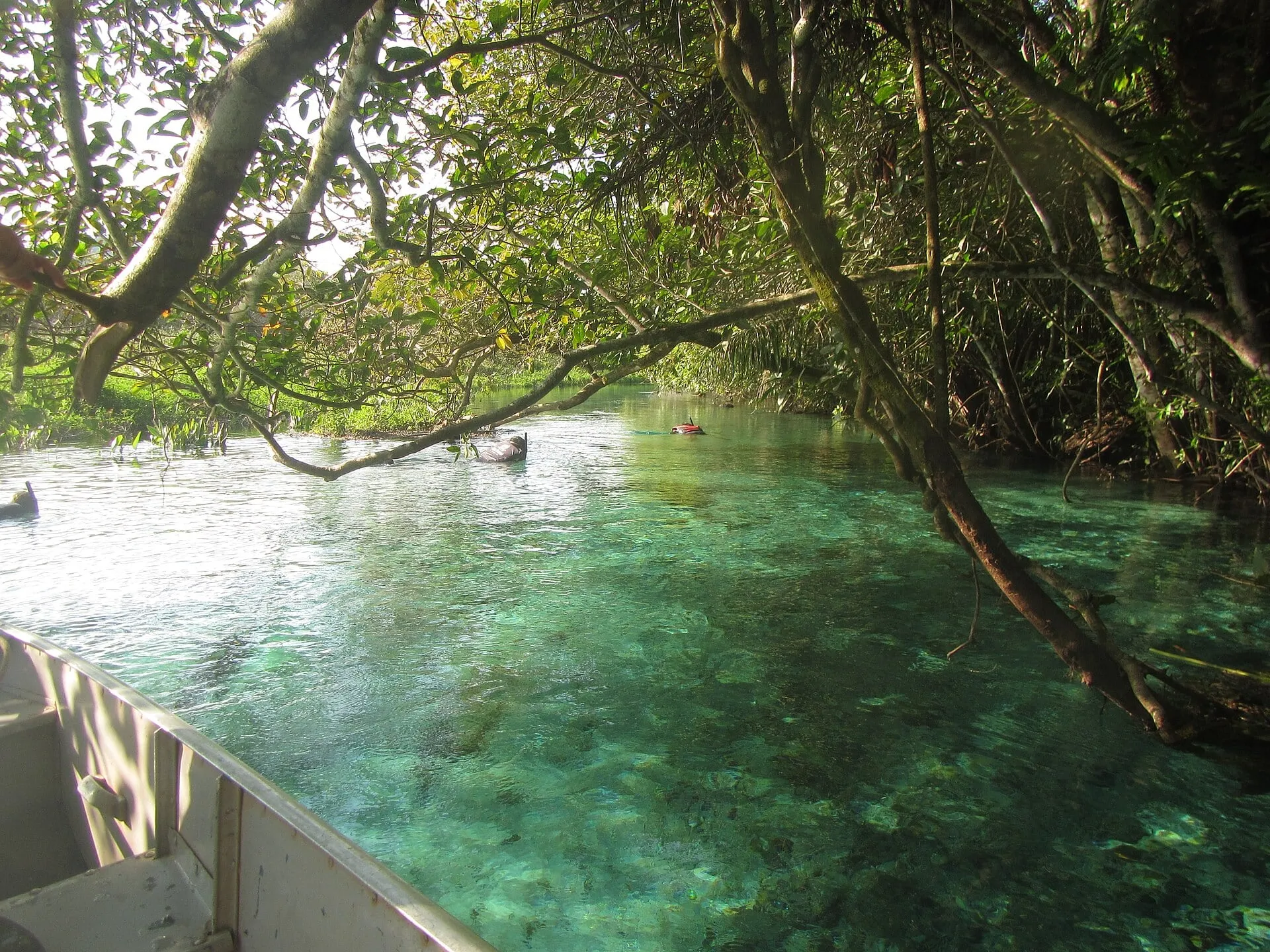
Snorkeling in spring-fed rivers. The signature activity is what locals call flutuação: you put on a wetsuit, mask and snorkel and drift downstream with the current, guided, over beds of aquatic plants and shoals of fish that do not move away. No swimming ability beyond floating is required. The best-known rivers are the Rio da Prata and the Sucuri River.
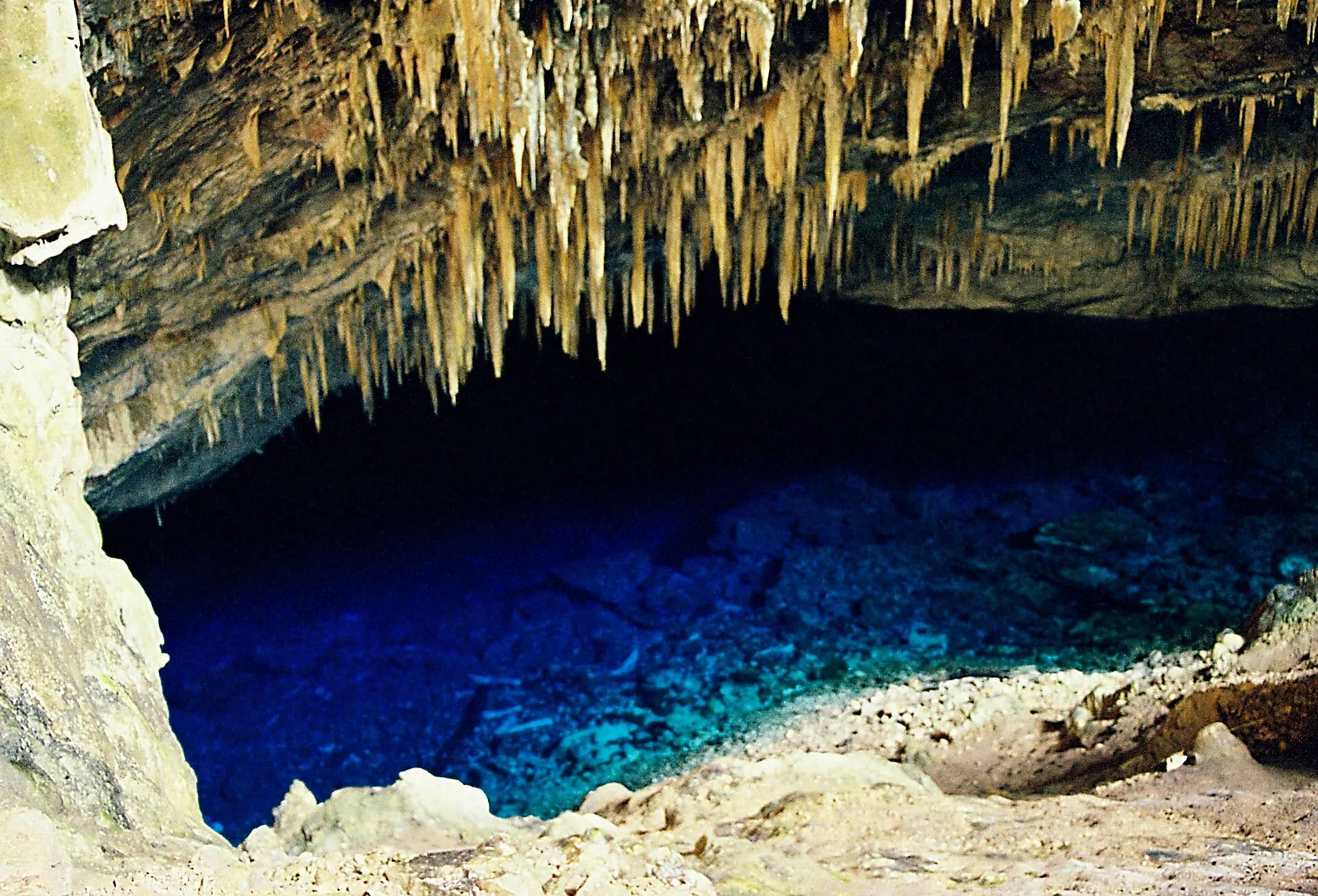
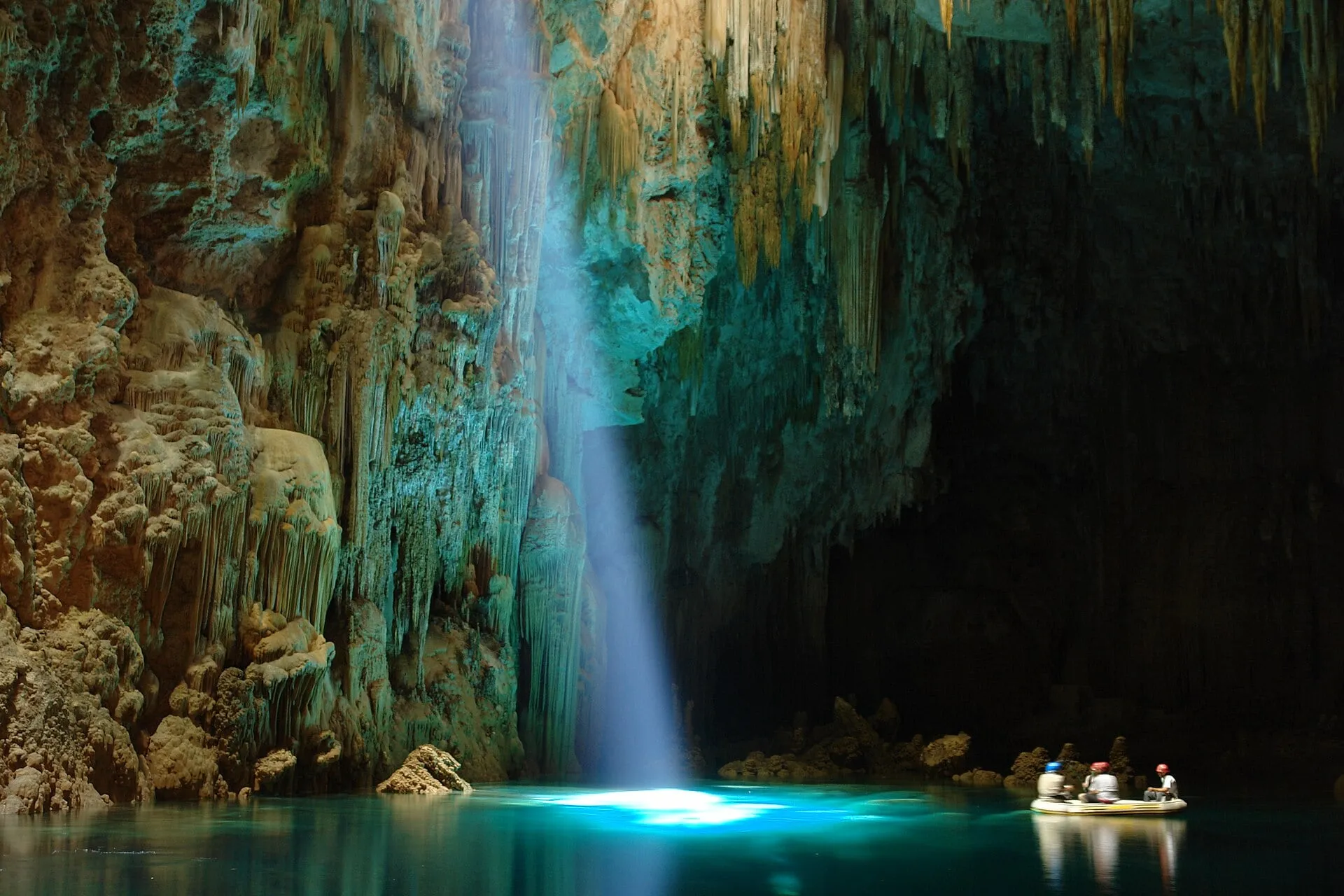
Caves and sinkholes. The Blue Lake Cave is the postcard: a limestone cavern with a deep blue lake at the bottom, visited on foot. The Anhumas Abyss is a 72-meter rappel into a flooded cave. Lagoa Misteriosa is a sinkhole you snorkel in, and Buraco das Araras is a dry sinkhole where red-and-green macaws nest on the walls.
Waterfalls and river beaches. Several private farms run trails past series of waterfalls with natural pools, and the municipal river beach on the Formoso River is the cheap, walk-in option for a hot afternoon.
Bonito is not a beach destination and not a nightlife town. Tours leave early, often between 7 and 9 am, and evenings are dinner and rest.
The single-voucher system
This is the rule that surprises most foreigners. Attractions in Bonito do not sell tickets at the gate. Every tour is booked through a licensed local travel agency, which issues a voucher with your name, the tour, the date and the time slot. The ticket price of each attraction is set by the attraction and is the same at every agency; what varies is transport, service and language support.
The system exists to cap the number of visitors per day at each site. In practice it means three things: book ahead for popular tours in high season, choose an agency for its service rather than its ticket price, and expect a timetable rather than a walk-in. Details are in how Bonito’s voucher system works.
Where Bonito is
Bonito sits in the south-west of Mato Grosso do Sul, about 300 km by paved road from Campo Grande, the state capital and the nearest large airport. It is roughly 1,000 km from São Paulo and 1,500 km from Rio de Janeiro. The southern Pantanal, one of the largest wetlands in the world, begins about 130 km to the north, which is why many foreign visitors combine the two.
The town has around 22,000 residents and a compact center with agencies, restaurants and hotels. Attractions are spread over a radius of 6 to 72 km, several of them in the neighboring municipalities of Jardim and Bodoquena.
Getting there
- Getting to Bonito, Brazil from Abroad: Flights, Transfers and Routes There is no direct international route. Bonito is reached in three legs: an international flight to São Paulo, a domestic flight to Campo Grande and three to four hours by car or four to five by transfer.
- How to Get to Bonito, Brazil: Flights, Transfers, Car and Bus A direct flight to Bonito, a flight to Campo Grande plus 3 to 4 hours by car or 4 to 5 by transfer, bus or car: what changes in time, cost and convenience.
- Driving in Brazil: Renting a Car for Bonito and What to Expect on the Road A car is not necessary in Bonito, but it pays off for families, lodges outside town and a Pantanal add-on. What the roads are like and what your license needs to be.
How long to stay
Three full days is the practical minimum: it covers a river snorkel, the Blue Lake Cave and a waterfall or river-beach day. Four to five days is the comfortable length, with room for a second river, a sinkhole and a slower afternoon. A week lets you add the Pantanal or the more demanding tours.
Because tours run on time slots and distances add up, plan one main activity per morning and a lighter one per afternoon, not three per day. See how many days to spend in Bonito and the Bonito itinerary for day-by-day plans.
When to go
The dry season, May to September, is the safest bet for river visibility: little rain, low sediment, water at its clearest. Days are warm, around 25 to 30 °C, and nights can turn cold in June and July when polar fronts pass, occasionally dropping below 10 °C. July is Brazil’s school holiday and the busiest month of the year.
October to March is the rainy season. It is hot, often above 35 °C, the landscape is greener and waterfalls are fuller, but heavy rain can cloud the rivers for a day or two and attractions suspend snorkeling when visibility drops. Water temperature stays around 21 to 24 °C all year, so snorkeling is possible in any month.
For crowds, avoid Brazilian holiday weeks: Carnival, Easter, July, and the long weekends around September 7, October 12 and November 15. More in best time to visit Bonito.
How to get there, in brief
Fly into São Paulo (GRU) and connect to Campo Grande (CGR), a flight of about two hours. From Campo Grande, a scheduled shared transfer takes four to five hours (a rental car, three to four) on a paved road. Bonito has a small airport of its own (BYO) with limited service, mostly from São Paulo and varying by season; check current schedules before you count on it. The full breakdown is in getting to Bonito from abroad.
Money, documents, phone and driving
- Money. Cards work in agencies, hotels and most restaurants; cash is useful for small purchases and remote lodges. See money, cards and costs.
- Entry rules. Visa requirements depend on your nationality and changed in 2025 for several countries. See Brazil entry requirements.
- Connectivity. Fine in town, absent on most rivers and farms. See SIM cards and internet.
- Driving. Worth it for some trips, unnecessary for others. See driving and car rental.
- Everything else, from language and plugs to time zone, safety and packing, is in practical tips.
Practical pages for foreign visitors
- Money in Bonito, Brazil: Cards, Cash, Pix and What Things Cost Cards cover most of a trip to Bonito. Here is what still needs cash, why Pix probably will not work for you, and what a day costs in Brazilian reais.
- Brazil Entry Requirements for a Trip to Bonito: Passport, Visas and Vaccines Visa rules for Brazil depend on your passport and have changed recently. What to check, where to check it, and the health paperwork worth sorting out before a trip to Bonito.
- SIM Cards, eSIMs and Internet in Bonito, Brazil An eSIM bought before you fly is the easiest option. Local SIMs are cheap but registration can be awkward for foreigners, and no SIM at all works on the rivers.
- Bonito, Brazil Practical Tips: Language, Plugs, Time Zone, Safety and Packing The small things that decide whether a week in Bonito runs smoothly: which plug adapter, what time it really is, when Brazil goes on holiday and what belongs in your bag.
Where to stay
Most visitors stay in the town center, where agencies pick you up at the door and restaurants are within walking distance. Farm lodges and resorts outside town trade that convenience for space and quiet, and make more sense with a car. Areas and options are in where to stay in Bonito.
Language
English is limited. The larger agencies and some hotels have English-speaking staff, and a number of guides speak English on the main tours, but expect Portuguese in restaurants, shops and smaller lodges. Spanish is understood better than English. A dozen Portuguese phrases and a translation app get you through the week.
Plan your days
- Things to Do in Bonito, Brazil: Tours by Type of Experience Snorkel down a crystal-clear river, walk down into a cave, hike to a waterfall or rappel 72 meters into a cavern: things to do in Bonito, Brazil, sorted by type of experience.
- Bonito Itinerary: How to Plan Yours by Region and Driving Time Bonito's tours are spread across three directions and up to 72 km from the center. Grouping them by region is what separates a good itinerary from an exhausting one.
- How Many Days Do You Need in Bonito, Brazil? Four full days cover the essentials without rushing. See what fits into each trip length and how travel time to and from Bonito affects the count.
- Where to Stay in Bonito, Brazil: Choosing the Area and Type of Lodging No lodging in Bonito is close to every tour. The right choice depends on whether you have a car, your budget and what you want to do in the late afternoon.
Is Bonito worth the detour?
For most foreign travelers, yes, provided you have at least three days and you like being in the water. It is one of the few places where clear-water snorkeling happens in a river rather than the sea, with fish within arm’s reach, and its caves compare with better-known ones in Mexico and Europe. It is not worth it as a one-night stop: the distance from São Paulo or Rio means a day of travel each way, and the tours need time.
Related tours
Cave
Blue Lake Cave (Gruta do Lago Azul)
Bonito's postcard: a limestone cave with a deep, electric-blue lake, 21 km from town. A walk-and-look tour with no swimming.
- 21 km from town
- 1.3h
- Minimum age: 6+
from R$120 *
River snorkeling · Jardim
Rio da Prata River Snorkeling
The longest river snorkel in the Bonito region: over 2 km of drifting with the current, a forest trail and lunch included, 50 km from town.
- 50 km from town
- 4h
- Minimum age: 5+
from R$470 *
River snorkeling
Sucuri River Snorkeling (Rio Sucuri)
The clearest river snorkel in Bonito: 1.8 km drifting from a spring with the current, 19 km from town, with a boat ride back.
- 19 km from town
- 2.5h
- Minimum age: 4+
from R$349 *
Adventure
Anhumas Abyss (Abismo Anhumas)
A 72-meter rappel into a cave with a lake at the bottom, then snorkeling or scuba diving among limestone cones. Bonito's most expensive and most restricted tour.
- 23 km from town
- 4h
from R$997 *
Frequently asked questions
Is Bonito, Brazil safe for tourists?
Yes. Bonito is a small town whose economy depends on tourism, and street crime is low compared with Brazil's large cities. The risks that matter here are practical ones: sun, heat, dirt roads after rain and animals on the highway at night. Take normal precautions with valuables and you will have no trouble.
Do I need to speak Portuguese to visit Bonito?
No, but expect little English outside the larger agencies and hotels. Guides on the main tours often speak some English, and Spanish is widely understood. A translation app and a few basic phrases cover restaurants, shops and pickups.
Do I need to book tours before arriving in Bonito?
In high season (July, Brazilian holidays, Christmas to Carnival) yes, at least for the most popular tours, because each attraction admits a fixed number of visitors per day. In low season you can book in town a day or two ahead through any licensed agency.
Can I visit Bonito without a car?
Yes. Agencies sell tours with transport from your hotel, and most visitors who stay in the town center never drive. A car becomes worthwhile for families or groups, for lodges outside town, or if you want to combine Bonito with the Pantanal at your own pace.
Can you combine Bonito with the Pantanal?
Easily. The southern Pantanal begins about 130 km north of Bonito, and lodges around Miranda and Aquidauana sit on the road back to Campo Grande. Two nights in the Pantanal plus three or four in Bonito is the most common combination for foreign visitors.
Do I need to know how to swim?
Not for most tours. River snorkeling is done in a wetsuit or life vest that keeps you afloat, and a guide stays with the group. You do need to be comfortable putting your face in the water with a mask. A few tours, such as the Anhumas Abyss, have their own physical requirements.