Bonito, Brazil Travel Guide: What to Know Before You Go
Bonito, Brazil Practical Tips: Language, Plugs, Time Zone, Safety and Packing
The small things that decide whether a week in Bonito runs smoothly: which plug adapter, what time it really is, when Brazil goes on holiday and what belongs in your bag.
Updated September 24, 2026 · Guia de Bonito editorial team
Most of what makes Bonito, Brazil unusual for a foreign visitor is not the tours; it is the small daily details of a rural Brazilian town that does not see many non-Portuguese speakers. This page collects them: language, electricity, time zone, safety, health rules on tours, the weather, Brazil’s holiday calendar and a packing list that fits the way tours actually work.
Language
Portuguese is the language of everything. In Bonito, the larger agencies and some hotels have English-speaking staff, and guides on the most visited tours often give at least the safety briefing in English. Beyond that, restaurants, shops, drivers, pharmacies and smaller lodges operate in Portuguese, and Spanish is understood better than English because of the nearby Paraguayan and Bolivian borders.
Three habits make the week easy:
- Ask your agency, when booking, for English-speaking guides on the tours where explanations matter (the Blue Lake Cave, the Anhumas Abyss, wildlife tours). It is a normal request and often free, though not always possible on every slot.
- Install a translation app with offline Portuguese, since there is no signal on most tours.
- Learn a few phrases. “Bom dia” (good morning), “obrigado/obrigada” (thank you, said by men/women), “por favor”, “a conta, por favor” (the bill, please), “quanto custa?” (how much?), “onde fica…?” (where is…?), “não entendo” (I do not understand), “fala inglês?” (do you speak English?).
Electricity and plugs
Brazil uses type N sockets: three round pins in a recessed face. The two-pin European plug (type C) fits. North American, British and Australian plugs do not; bring an adapter, ideally two, since hotels in Bonito rarely lend them.
Voltage is the trap. Brazil has both 127 V and 220 V, varying by state and sometimes by building. In Mato Grosso do Sul, 127 V is the most common, but 220 V outlets exist and are not always labeled. Phone, camera and laptop chargers are almost always dual-voltage (look for “100–240 V” on the label); hair dryers and straighteners often are not. When in doubt ask “é 110 ou 220?”, the terms locals use.
Time zone
Mato Grosso do Sul is on UTC−4 all year, one hour behind Brasília, São Paulo and Rio, which are on UTC−3. Brazil abolished daylight saving time in 2019, so the difference is constant.
The practical consequence: flights to and from Campo Grande are timed in local UTC−4 time, one hour behind São Paulo. Phones usually update automatically; confirm on arrival. Tour pickup times are local time.
Safety
Bonito is a small town of about 22,000 people that lives from tourism, and street crime is low; visitors walk around the center at night without concern. Standard precautions still apply: do not leave phones and cameras visible in a parked car, use the hotel safe for passports and spare cards, and watch belongings at busy river beaches.
The risks that actually send visitors home early are physical, not criminal: sun and dehydration after long hours outdoors; slippery rock and stairs on cave descents and waterfall trails, which is why closed shoes with grip are required on many tours; animals on the highway at night and dirt roads after rain (see driving in Brazil for Bonito); and, in the water, not following the guide. Tell guides about any medical condition before a tour.
Emergency numbers in Brazil: 192 for ambulance (SAMU), 190 for police, 193 for the fire brigade. Bonito has a public hospital and private clinics for basic care; serious cases go to Campo Grande.
Health on the ground
Mosquitoes. Dengue circulates throughout Brazil, with more cases in the rainy season (October to April). Use repellent in the evenings and in town, wear long sleeves at dusk, and choose accommodation with screens or air conditioning. There is no malaria in Bonito or the southern Pantanal. Yellow fever vaccination is recommended for the state; see Brazil entry requirements.
Sun and sunscreen rules. Bonito is at 21° south and UV is strong all year. Attractions restrict sunscreen and repellent in the water to protect visibility and fish: some allow biodegradable, reef-safe products applied well before entering, many ask you to enter with no product at all and shower first. The wetsuit or a long-sleeved rash guard is the real sun protection while snorkeling; apply sunscreen for the trail and after the water section, and bring a biodegradable one to be safe.
Heat and hydration. Summer days reach 35 to 40 °C. Drink more than you think, carry a refillable bottle and fill it from hotel filters; attractions sell water. Alcohol at lunch before an afternoon in the sun is a frequent mistake.
Weather by season
| Months | What to expect |
|---|---|
| May–September (dry season) | Little rain, clearest rivers, days of 25–30 °C. Cold fronts in June–August can push nights below 10 °C for a few days. Busiest in July. |
| October–November | Heating up, first storms, green landscape. Rivers usually clear; occasional cloudy days after heavy rain. |
| December–March (rainy season) | Hot and humid, 30–40 °C, afternoon downpours. Fullest waterfalls; rivers can turn cloudy for a day or two. Peak demand at Christmas, New Year and Carnival. |
| April | Rains ease, temperatures drop, water clears. Underrated. |
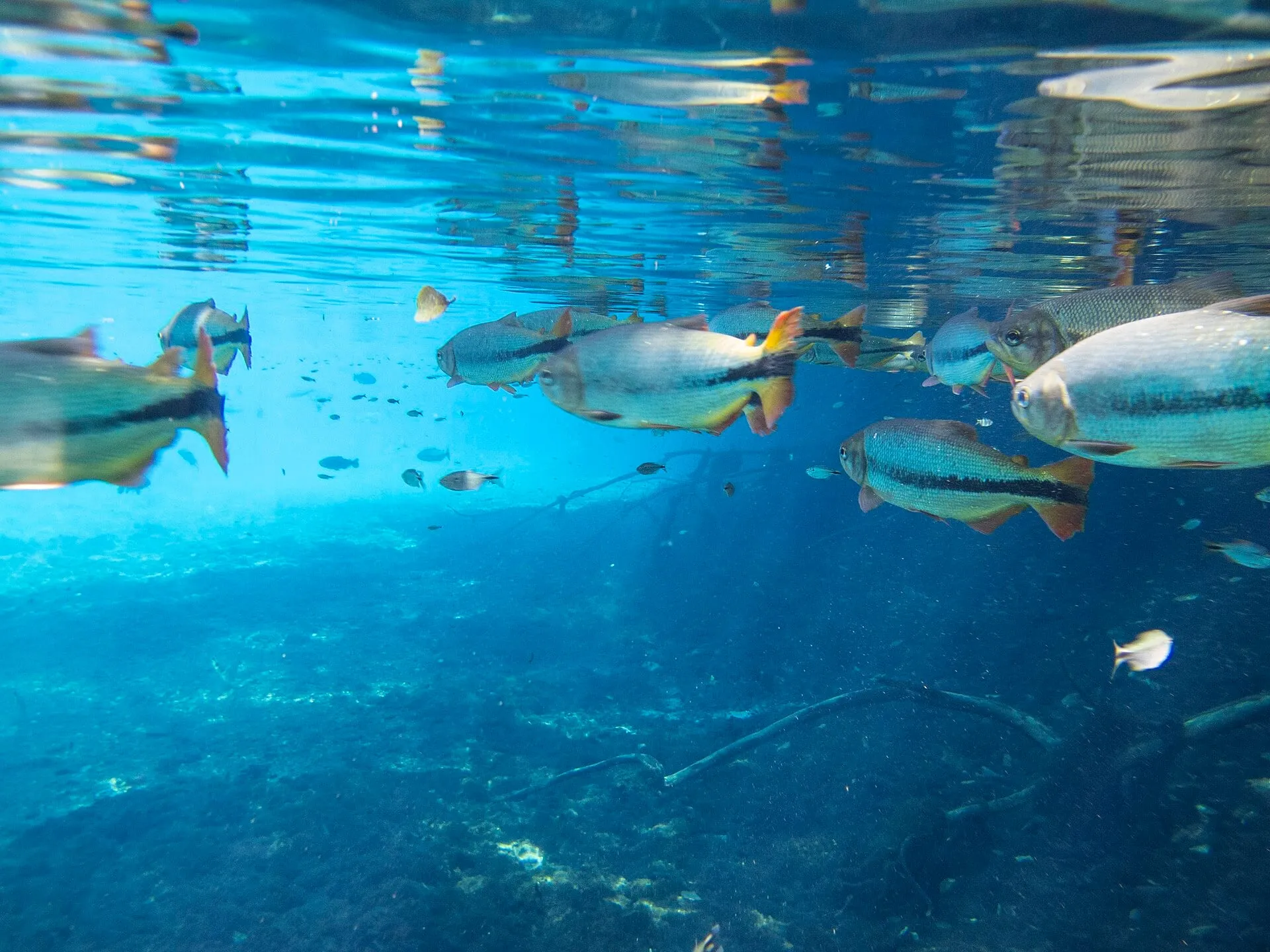
River water stays around 21 to 24 °C all year; wetsuits are provided on snorkeling tours. Month by month detail is in best time to visit Bonito.
Brazilian holidays that raise demand
Bonito’s tours have daily visitor caps, so Brazilian holidays hit harder than in destinations that can simply absorb more people. Expect sold-out slots and higher hotel rates on:
- Carnival (February or early March) and Holy Week and Easter (March or April);
- April 21, May 1 and Corpus Christi (a Thursday in May or June), often stretched into long weekends;
- July, the school winter holiday and the single busiest month;
- September 7, October 12, November 2, November 15 and November 20, each a long weekend when it falls near a Friday or Monday;
- Christmas to New Year, running into the January school holiday.
If your dates touch any of these, book tours and rooms weeks or months ahead. Outside them, especially May, June, August and September, a few days’ notice is enough for most tours.
Booking ahead
Lock in three things before you fly: accommodation, the two or three tours you most want (through a licensed agency, which issues the vouchers) and the transfer from Campo Grande. The rest can be arranged in town. Ask about cancellation rules, since snorkeling is suspended when rivers turn cloudy and rescheduling depends on availability. The system is explained in how Bonito’s voucher system works.
What to pack
Tours dictate the packing list more than the season does.
- Swimwear worn under clothes in the morning, plus a change of clothes.
- Closed shoes with grip for caves and trails; many tours refuse flip-flops.
- Quick-dry towel and a dry bag for wet items.
- Long-sleeved rash guard, hat, biodegradable sunscreen, repellent for evenings.
- Refillable water bottle; a rain jacket in the rainy season, a fleece for June to August nights.
- Type N plug adapter, power bank, waterproof phone pouch.
- Copies of passport and vouchers on the phone; small cash in reais; prescription medication in original packaging.
Leave drones at home; most attractions prohibit them.
For the overview and links to every practical page, start with the Bonito, Brazil travel guide; for payment questions see money, cards and costs, and for connectivity see SIM cards and internet.
Frequently asked questions
What time zone is Bonito, Brazil in?
Bonito, and all of Mato Grosso do Sul, is on UTC−4, one hour behind Brasília and São Paulo. Brazil no longer observes daylight saving time. Flight times in São Paulo and Campo Grande are printed in local time, so check that your phone changes zone when you land in Campo Grande.
What plug adapter do I need for Brazil?
Brazil uses type N sockets, a three-round-pin standard that also accepts the two-pin European type C plug. Voltage varies by region; in Mato Grosso do Sul most outlets are 127 V, though 220 V exists. Chargers for phones and laptops handle both; hair dryers and other single-voltage devices may not, so check the label.
Can I use sunscreen on the snorkeling tours?
Not in the water. Attractions in Bonito ask visitors not to apply sunscreen or repellent before entering the rivers, to protect water clarity and fish; some allow biodegradable products and some none at all. Wear the wetsuit or a long-sleeved rash guard for sun protection and apply sunscreen after the water section.
Is tap water safe to drink in Bonito?
Municipal water is treated, but most visitors and many locals drink filtered or bottled water, and hotels usually provide filtered water. Bring a refillable bottle and fill it from hotel filters; attractions sell bottled water at reception.
When is Bonito busiest?
July, when Brazilian schools are on holiday, and the long weekends around Carnival, Easter, September 7, October 12, November 15 and the Christmas to New Year period. On those dates the most popular tours sell out weeks ahead and accommodation prices rise. May, June, August and September outside holidays are the quiet, clear-water months.